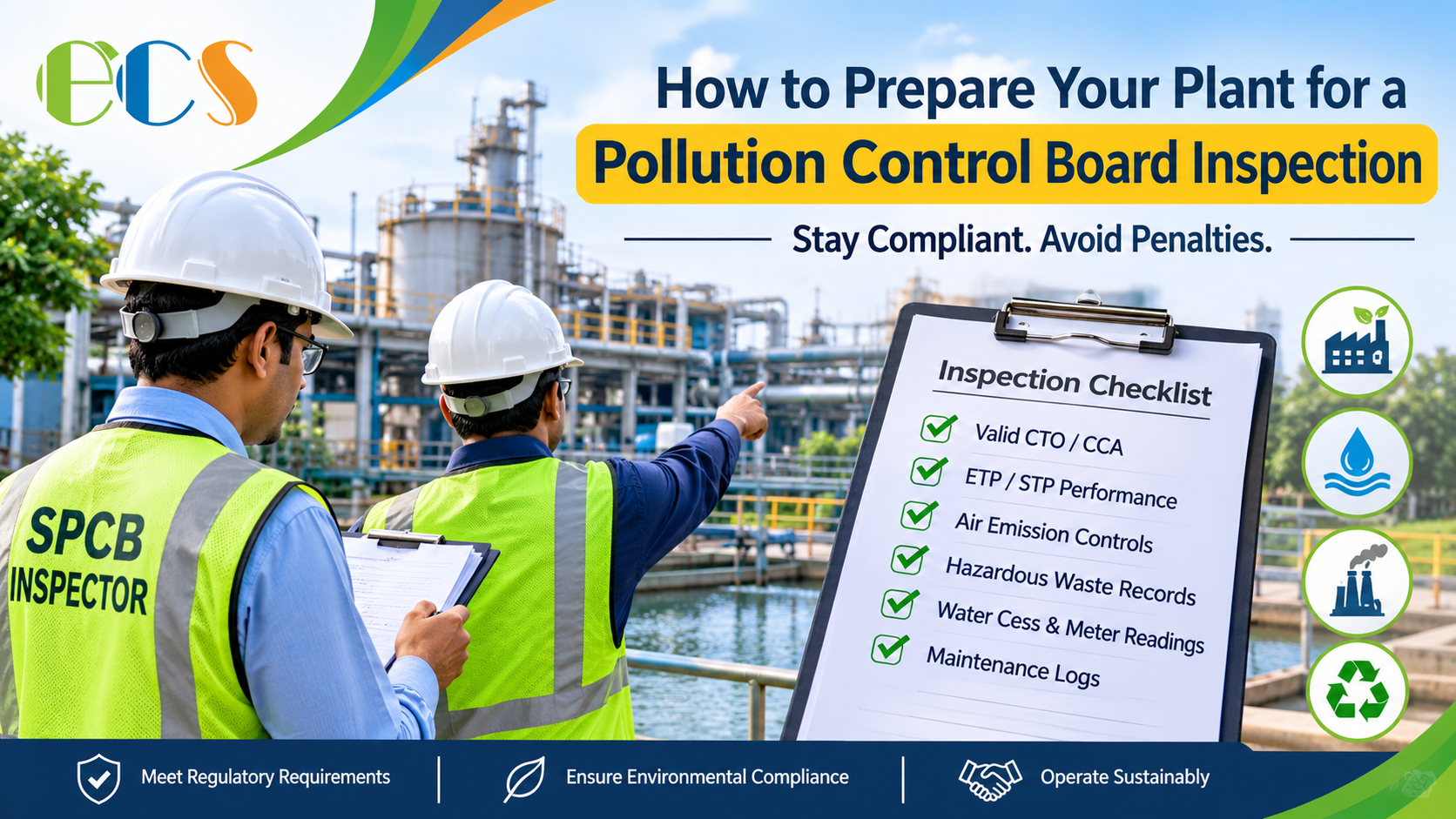
An unannounced or sudden visit from a State Pollution Control Board (SPCB) or Pollution Control Committee (PCC) official can create stress on the shop floor. No matter if its the MPCB in Maharashtra the GPCB in Gujarat or any other state-level board inspectors don’t care about promises or intentions. They only care about facts— numbers, valid consents, working effluent treatment plants (ETP) and complete logbooks.
When a team walks through your gate rushing to gather documents or fix a broken flow meter is too late. That’s not compliance. Real compliance starts with habits—keeping your systems running and your records up to date all year round.
Here is a practical guide that shows what inspectors actually look for during an SPCB inspection the documents they demand and the common mistakes that lead to consequences, like show-cause notices or even closure orders.
What SPCB Inspectors Look For First
When field officers enter a facility they usually follow a standard process. They look at your permissions first before going out to check the physical plant and the points where waste is released.
1. Valid Consent to Operate (CTO / CCA) and Authorization
The foundational check is always legal validity. Inspectors verify whether your current production capacity, fuel types, and raw materials match what was approved under your Consent to Operate (CTO) or Consolidated Consent and Authorization (CCA).
- The Pitfall: Operating with an expired consent or running unapproved production lines is an immediate red flag. Even if a renewal application is pending on the state online portal, operating without an active CTO grants inspectors immediate grounds to issue closure notices under Section 33A of the Water Act or Section 31A of the Air Act.
2. Effluent Treatment Plant (ETP) and STP Performance
For water-polluting industries, the Effluent Treatment Plant is the primary focus of any inspection.
- What They Check: Inspectors check whether the ETP is running continuously, whether chemical dosing logs are maintained, and if treated water meets prescribed discharge standards. They will inspect final discharge points, collection chambers, and online continuous emission/effluent monitoring systems (OCEMS) if your category requires them.
- The Pitfall: Bypassing the ETP, running storm-water drains into trade effluent lines, or keeping flow meters uncalibrated will result in heavy environmental compensation penalties
3. Air Pollution Control Devices (APCD) and Stack Monitoring
If your plant operates boilers, DG sets, furnaces, or thermic fluid heaters, air emissions are closely scrutinized.
- What They Check: Inspectors examine stack heights against your CTO specifications, verify fuel logs (checking whether approved fuels like PNG, biomass, or low-sulfur diesel are used instead of prohibited substitutes), and review stack monitoring reports from NABL-accredited labs.
- The Pitfall: Broken sampling ports, missing platforms for safe stack access, or unmaintained bag filters/scrubbers are flagged immediately.
4. Hazardous Waste Storage and Manifests (HWM Rules)
Industrial facilities generating hazardous waste must manage storage according to the Hazardous and Other Wastes (Management and Transboundary Movement) Rules.
- What They Check: Inspectors visit the hazardous waste storage shed to check for proper bunding, impermeable flooring, bilingual hazard warning signage, and container labeling. They cross-verify physical stock against Form 3 (Hazardous Waste Register) and Form 4 (Annual Return) entries, alongside Form 10 manifests for waste handed over to authorized recyclers or co-processing facilities.
- The Pitfall: Storing waste beyond the permissible 90-day limit without valid SPCB permission, or keeping unlined drums directly on soil.
SPCB Inspection Checklist: Documents to Keep Ready
When the inspection team sits down in the conference room, having these documents organized saves hours of confusion:
| Record / Document | What Inspectors Verify | Where to Keep It Accessible |
| Valid CTO / CCA Order | Permitted production capacity, approved product mix, and validity dates. | EHS Manager desk & main security office |
| ETP / STP Operation Logs | Daily power consumption, chemical dosing quantities, and treated water test reports. | ETP control room |
| Stack & Ambient Air Reports | Periodic emission monitoring data from NABL-approved laboratories. | EHS compliance file |
| Hazardous Waste Registers | Form 3 (stock register) and Form 10 manifests for all dispatches. | Hazardous waste storage facility |
| Water Cess & Meter Readings | Flow meter logbooks for borewells, industrial usage, and domestic discharge. | Utility / Maintenance department |
| DG Set & Boiler Logs | Fuel purchase invoices, logbooks for running hours, and maintenance records. | Utility control room |
Common Mistakes That Trigger SPCB Penalties
- Relying on “Deferred Maintenance”: Fixing broken pumps, leaking pipes, or damaged ETP aerators only when an inspection is announced looks suspicious to officers. Keep maintenance logs current.
- Ignoring Housekeeping Around Storage Yards: Storing scrap, chemical carboys, or sludge bags in open, unpaved areas leads to rainwater runoff contamination—a direct violation picked up during site walks.
- Mismatched Production Data: If your electricity consumption records or production output figures don’t match the capacity declared in your SPCB filings, inspectors will assume unauthorized expansion.
How to Handle the Inspection Day Professionally
- Escort the Team Safely: Always provide proper PPE (helmets, safety shoes, jackets) to visiting officers before entering the plant floor.
- Be Transparent and Direct: Answer questions factually. Do not attempt to hide operational areas or delay access to logs.
- Take Joint Notes: ECS recommends having an EHS representative take detailed notes on every area inspected, samples collected, and observations made by the officers so you can track corrective actions immediately
Maintaining Continuous Compliance
Passing an SPCB inspection isn’t about putting on a show when officers arrive—it is about maintaining steady operational hygiene. Implementing regular internal audits ensures your plant stays prepared for regulatory visits at any time.
If your facility needs an independent environmental audit, assistance with Consent to Operate (CTO / CCA) renewals, or support with Wastewater Management and ETP optimization, contact Environmental Compliance Services (ECS) to speak with our technical team.
Q1: Can a Pollution Control Board conduct unannounced inspections?
A: Yes. State Pollution Control Board officials have the statutory authority under the Water and Air Acts to conduct unannounced surprise inspections, collect effluent/emission samples, and review plant operational records at any time.
Q2: What happens if effluent sample test results fail SPCB standards?
A: If sample results fail prescribed standards, the SPCB typically issues a show-cause notice, levies environmental compensation fines based on pollution severity, and may direct the plant to rectify its treatment system or face temporary closure.
Q3: How long must hazardous waste manifests be maintained on site?
A: Facilities must maintain copies of Form 10 hazardous waste manifests and Form 3 stock registers for a minimum of 5 years, making them readily available for verification during annual board audits or inspections.